

USMLE Step 3 Software Updated to new testing software on March 10, 2026. Learn about the new interface, shorter exam blocks, and when Step 2 CK and Step 1 will transition.
Table of Contents
Introduction
On March 10, 2026, the USMLE switched Step 3 to a new test delivery software platform. If you have an exam coming up or you’re deep in prep right now, here’s what changed and what didn’t.
The short version: the interface looks different, the blocks are shorter, and the total exam time is exactly the same. No content changes, no scoring changes, no surprises on that front.
Step 3: New software active as of March 10, 2026
Step 2 CK: Transition begins May 7, 2026
Step 1: Transition begins May 14, 2026
What the New USMLE Step 3 Interface Looks Like
The redesigned layout is cleaner. Navigation has been streamlined, the settings menu has been updated, and there’s a contrast adjustment tool for medical images. That contrast feature is genuinely useful for questions involving CT scans, pathology slides, and dermatology photos—conditions where the difference between a right and wrong answer can come down to image clarity.
Keyboard navigation has also been improved, which helps candidates who prefer not to mouse through a 230-question exam.
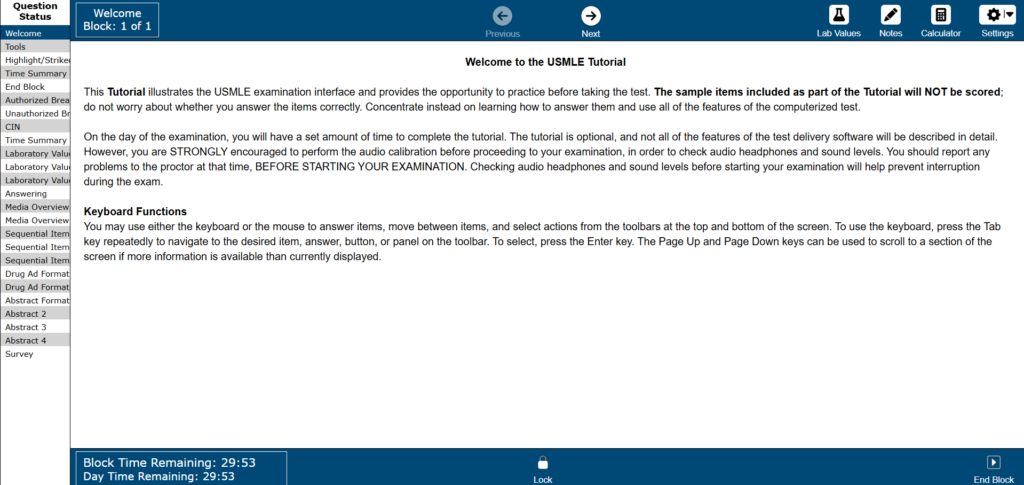
Try the New USMLE Exam Software (Official Tutorial)
The USMLE program has released an interactive tutorial that allows candidates to experience the new testing software before exam day.
This tool demonstrates the updated exam interface, navigation controls, question layout, and image display features that are now used in the real exam.
Why Did USMLE Update the Software?
Testing software doesn’t last forever. The USMLE program upgrades its platform periodically to keep the system secure and to bring the exam interface in line with modern assessment tools.
This 2026 USMLE interface update focuses on three things: a cleaner layout, better image rendering (especially relevant for radiology and pathology questions), and tighter alignment between the official practice tools and the actual exam. That last one matters more than people realize, practicing on something that looks nothing like the real thing isn’t great for building exam-day familiarity.
The Block Structure Is Different—Here’s the Breakdown
This is the most operationally significant change. The total question count and total exam time haven’t moved, but the exam is now split into more blocks with shorter time limits.
USMLE Step 3 Exam Format Changes: Old vs New (2026 Update)
Step 3 Day 1: Before vs. After
| Component | Old Format | New Format (Mar 10, 2026+) |
|---|---|---|
| Total Questions | 232 | No change |
| Number of Blocks | 6 | 12 |
| Questions per Block | 38–39 | 18–20 |
| Time per Block | 60 minutes | 30 minutes |
| Total Exam Time | ~7 hours | No change |
Step 3 Day 2: Before vs. After
| Component | Old Format | New Format (Mar 10, 2026+) |
|---|---|---|
| Total MCQs | 180 | No change |
| MCQ Blocks | 6 | 9 |
| Questions per Block | 30 | 20 |
| Time per Block | 45 minutes | 30 minutes |
| CCS Cases | 13–14 | No change |
| CCS Time | 10 or 20 minutes | No change |
The Clinical Case Simulation (CCS) section on Day 2 is untouched.
What Has NOT Changed
Worth saying clearly, since this is the kind of thing that causes unnecessary panic:
- Exam content outline
- Scoring system and pass/fail standards
- Total number of questions on both days
- Overall exam duration
- CCS case format and timing
- The rule that you cannot return to a previous block once it’s submitted
When Step 2 CK and Step 1 Will Switch
Step 3 is the first domino. The other exams follow in spring 2026:
- Step 2 CK: New software for all exams on or after May 7, 2026
- Step 1: New software for all exams on or after May 14, 2026
By mid-May, all three Step exams will run on the same platform. If you’re sitting any of these exams this spring, double-check your test date against these cutoffs.
How This Actually Affects Exam Strategy
Shorter blocks change the texture of the exam experience—not the difficulty. Here’s what that means practically.
Focus windows are shorter
You’re working in 30-minute bursts instead of 60-minute slogs. For most people, that’s easier to sustain. Mental fatigue is real on a 9-hour Day 2, and smaller checkpoints help.
Each block feels faster
Fewer questions per block means less time to find your rhythm. Some candidates will feel time pressure even in a 30-minute window with 20 questions. Practicing with timed 20-question blocks is a straightforward fix.
More natural stopping points
More blocks means more moments to stand up, breathe, and reset before the next one. Use them.
Practical Prep Adjustments
A few things worth doing before your exam:
- Complete the official USMLE testing tutorial. It’s been updated to match the new interface
- Run practice sessions in 20-question timed blocks
- If you use image-heavy question banks, practice toggling contrast on radiology and pathology images
- Build endurance for Day 2’s full-length format; shorter blocks don’t shorten the day

A Note for IMGs
For international medical graduates on the USMLE pathway, this is a technical update, not an exam redesign. The clinical knowledge being tested hasn’t changed.
That said, getting comfortable with the pacing of 20-question blocks before exam day is worth the effort. It’s a small thing that removes one variable on an already high-stakes day.
Common Mistakes Made by test takers
The USMLE Step 3 software update could trigger several mistakes.
Avoid these.
Common Mistakes
- Scheduling Step 3 without reviewing the new software interface.
- Assuming the exam content has changed when only the interface changed.
- Not practicing CCS navigation before test day.
- Ignoring the new block structure and timing changes.
- Waiting too late to align Step 3 with residency application plans.
Quick Checklist for Step 3 Candidates
Before scheduling your exam, ask yourself:
If I Were Starting Step 3 Preparation
If I were an IMG preparing today, I would follow this plan:
- Revise Step 2 CK notes
- Build strong clinical reasoning.
- Start Qbanks and CCS practice early.
- Review the new Step 3 software interface before scheduling.
- Take Step 3 before residency application season.
Step 3 should not feel like an obstacle.
It should feel like your final proof of readiness for residency.
Quick Summary
Step 2 CK: May 7, 2026 | Step 1: May 14, 2026
Changed: Interface, contrast tools, block structure (more blocks, shorter each)
Unchanged: Content, scoring, total questions, total exam time, CCS format
FAQs on USMLE Step 3 software update
When did the USMLE Step 3 software update happen?
March 10, 2026. Any Step 3 exam on or after that date uses the new platform.
Does the USMLE Step 3 software update change the exam difficulty?
No. The update only affects the testing interface. Question content, exam length, and scoring remain unchanged.
Do I need to reschedule my Step 3 exam because of the update?
Usually, no. If your exam is already scheduled, you will simply take it using whichever software is active on your test date.
Does the software update affect residency applications?
No. Residency programs care about your score, not the software used to deliver the exam.
Conclusion
The USMLE Step 3 software update launched on March 10, 2026, introducing a modern testing interface and shorter exam blocks.
Upcoming rollout dates include:
Key points:
- redesigned exam interface
- adjustable contrast for medical images
- shorter but more frequent blocks
- unchanged exam content and scoring
Overall, the update is designed to improve usability while maintaining the integrity of the USMLE examination process.
Feel free to check our USMLE Cost Calculator & YOG: Risk Calculator

Ready to Apply? Let Medvily Guide You!
Medvily offers a complete suite of services including:
- Tutoring / Mentoring
- Clinical Electives
- Observerships & Externships
- Clinical Research
- Residency Application Support
- Mock Interviews & IV Prep
- Medical Licensing Support
Disclaimer: All trademarks referenced herein are the property of their respective owners. Medvily disclaims any affiliation, sponsorship, or endorsement by such trademark owners or their affiliated companies. The information provided is for general informational purposes only.



[…] Check out USMLE USMLE Step 3 Software Updated (March 2026): New Exam Interface […]
[…] Check out USMLE Step 3 Software Updated (March 2026): New Exam Interface […]
[…] Check out USMLE Step 3 Software Updated (March 2026): New Exam Interface […]
[…] Check out USMLE Step 3 Software Updated (March 2026): New Exam Interface […]