Published: June 23, 2026
Last Updated: June 23, 2026
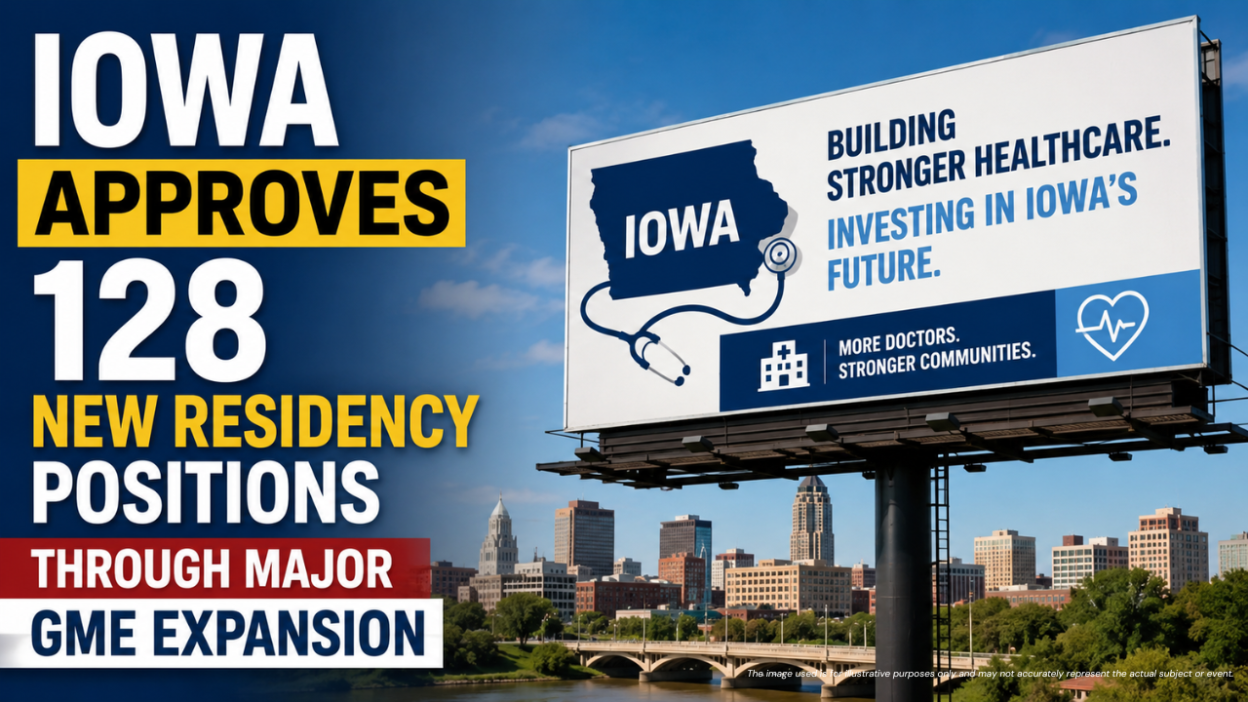
Iowa approves 128 new residency positions in a major Graduate Medical Education (GME) expansion, bringing nearly $49.5 million in annual federal funding to support physician training across 13 teaching hospitals. This expansion could create new residency opportunities in specialties like Internal Medicine, Family Medicine, and Psychiatry, making it an important development for both U.S. medical graduates and International Medical Graduates (IMGs).
Table of Contents
Intro
Iowa has secured approval for a Graduate Medical Education (GME) expansion creating 128 new residency positions across 13 teaching hospitals. Governor Kim Reynolds and Iowa Health and Human Services announced approximately $49.5 million in annual federal funding to support the expansion.
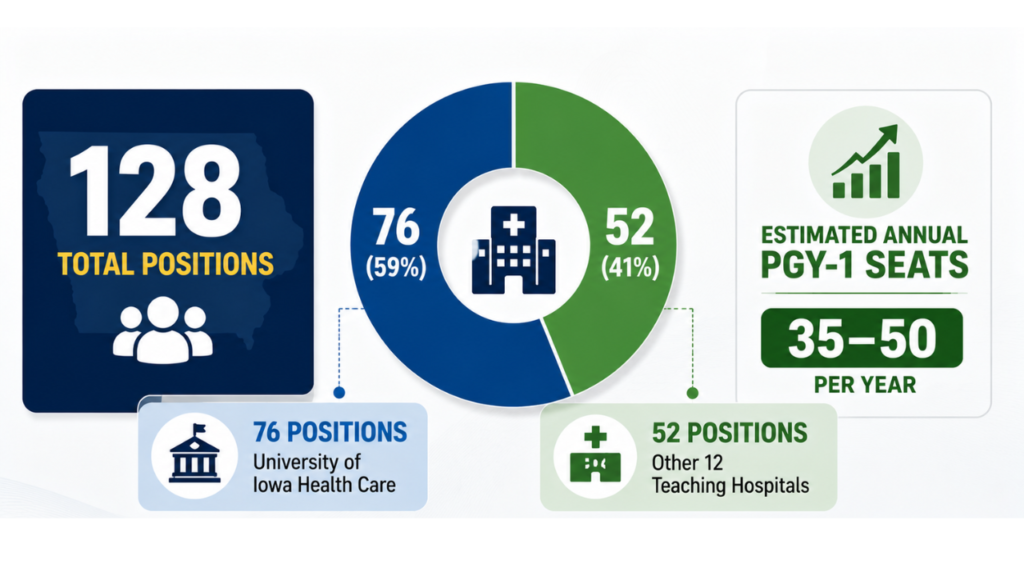
The largest share goes to University of Iowa Health Care, which is expected to receive around 76 of the 128 positions. The rest will be distributed among other Iowa teaching hospitals including UnityPoint, MercyOne, Broadlawns, and Genesis-affiliated programs.
For residency applicants, this matters, but not in the way the headline might suggest. 128 total positions does not mean 128 new PGY-1 seats per year. Realistically, this translates to roughly 35–50 new first-year spots annually, depending on which specialties expand. The most likely beneficiaries: Internal Medicine, Family Medicine, Psychiatry, Pediatrics, and rural primary care tracks.
What Was Announced?
Iowa approves 128 new residency positions through large-scale GME Funding
Here’s what the announcement further confirmed:
- 13 teaching hospitals involved
- $49.5 million in annual federal funding
- Focus on workforce shortage specialties
- Targeted at improving physician access in underserved communities
This is one of Iowa’s largest recent physician workforce investments.
What Is Graduate Medical Education (GME)?
GME covers physician training after medical school—residency, fellowship, and specialty certification.
In the U.S., a medical degree alone doesn’t allow independent practice. Physicians must complete accredited residency training first.
Some examples:
- Internal Medicine — 3 years
- Family Medicine — 3 years
- Pediatrics — 3 years
- Psychiatry — 4 years
- General Surgery — 5 years
Residency training costs hospitals money, faculty supervision, educational infrastructure, teaching time, resident salaries. Without GME funding, hospitals can’t easily add training capacity.
Why Iowa Needed This Expansion
Iowa faces physician shortages that are getting harder to ignore, especially in:
- Rural healthcare systems
- Primary care
- Mental health services
- Hospital medicine
- Geriatric care
A few factors driving this:
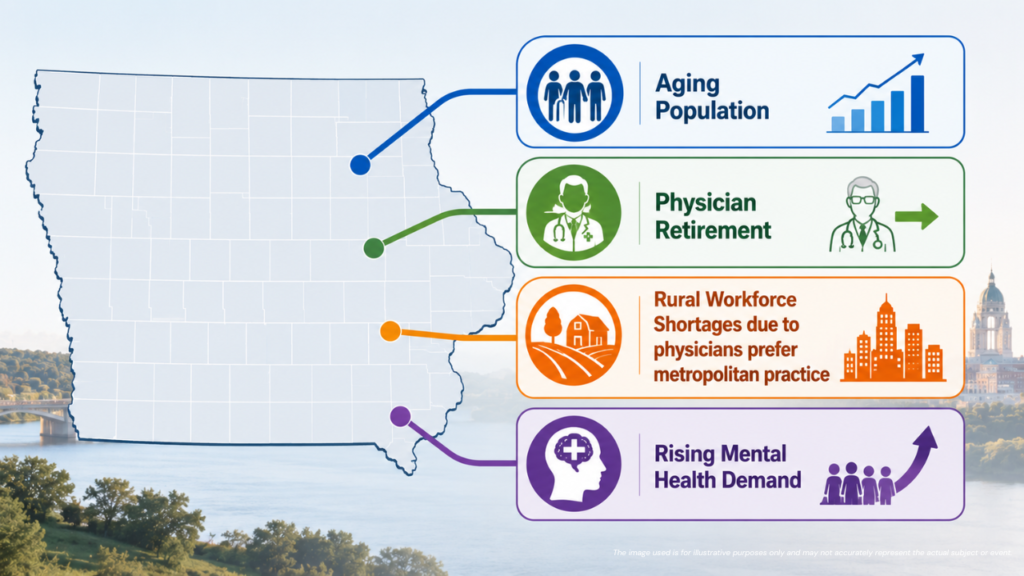
Aging Population
Older patients need more chronic disease management, hospital admissions, and specialist care. Demand scales up with age.
Physician Retirement
A significant portion of Iowa’s current physician workforce is near retirement. The replacement pipeline hasn’t kept pace.
Rural Workforce Shortages
Most residency-trained physicians prefer metropolitan practice. Smaller communities struggle to recruit and retain doctors.
Rising Mental Health Demand
Psychiatry shortages continue to worsen nationally. Iowa is no exception.
Which Hospitals May Receive New Positions?
Iowa confirmed 13 teaching hospitals, though the full position breakdown hasn’t been made public.
University of Iowa Health Care
Expected to receive approximately 76 of 128 total positions (~59%), consistent with its role as Iowa’s largest academic medical center.
Likely expansion specialties:
- Internal Medicine
- Psychiatry
- Pediatrics
- Family Medicine
- Rural training pathways
Other Likely Participating Hospitals
- UnityPoint Health – Iowa Methodist Medical Center
- MercyOne Des Moines Medical Center
- MercyOne Waterloo Medical Center
- UnityPoint Health – St. Luke’s
- UnityPoint Health – Allen Hospital
- UnityPoint Health – Finley Hospital
- Broadlawns Medical Center
- Genesis Medical Center
- Siouxland Medical Education Foundation
Some already run established residency programs. Others may expand existing tracks or launch new ones.
Does 128 Positions Mean 128 New Match Spots Every Year?
No, and this is probably the most misunderstood part of GME expansion announcements.
The 128 positions represent total funded resident capacity, not annual incoming slots.
Here’s how it works: if a hospital receives funding for 12 Internal Medicine residents total, and Internal Medicine is a 3-year program, that means:
- 4 PGY-1 residents per year
- 4 PGY-2 residents
- 4 PGY-3 residents
Total capacity = 12. Annual new seats = 4.
Applying that logic to Iowa’s expansion:
Estimated new PGY-1 seats per year: ~35 to 50
The exact number depends on specialty mix. Longer programs like Psychiatry or Surgery generate fewer annual incoming seats than shorter ones.
What Does This Mean for IMGs?
IMGs already face a bottleneck problem—not a qualifications problem. Residency slots are limited, and that limits how many qualified applicants match each year.
IMGs have historically matched well into:
- Internal Medicine
- Family Medicine
- Pediatrics
- Psychiatry
- Neurology
Community-based and workforce-shortage programs tend to be more open to IMGs than competitive academic centers, which makes expansion announcements like this worth paying attention to.
Specific reasons this could matter:
More Residency Opportunities
More funded positions means more interview invites and match openings over time.
New Programs
Newly created programs often recruit broadly in their early years before becoming established and selective.
Community Program Growth
Community hospitals generally show stronger IMG acceptance rates than academic programs.
Rural Pathways
Rural shortage programs prioritize workforce needs. They’re often less focused on prestige metrics when evaluating applicants.
Important Reality: These Positions May Not Appear Immediately
Funding approval doesn’t open ERAS slots the same year. Hospitals still need to work through several steps:
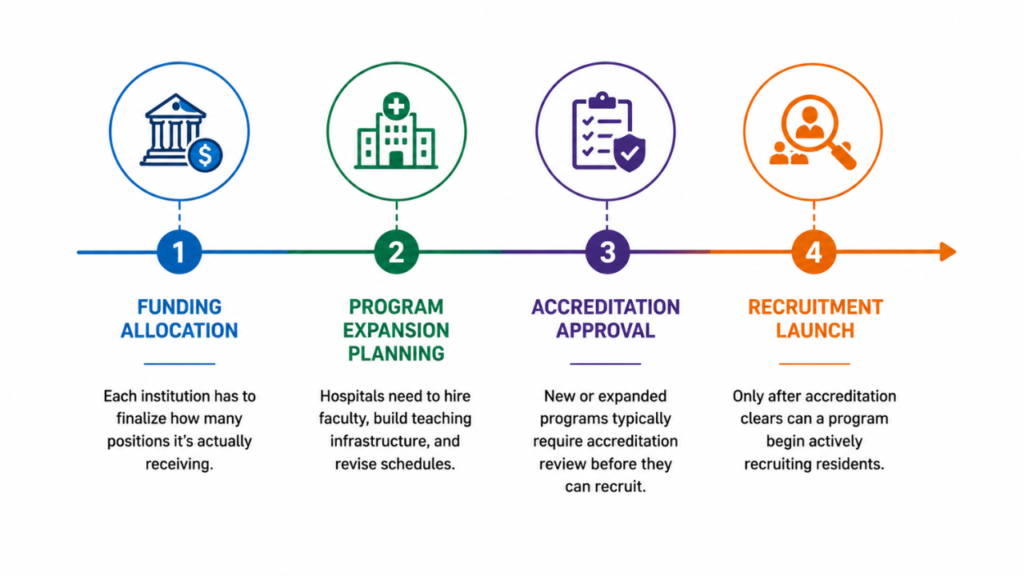
1. Funding Allocation
Each institution has to finalize how many positions it’s actually receiving.
2. Program Expansion Planning
Hospitals need to hire faculty, build teaching infrastructure, and revise schedules.
3. Accreditation Approval
New or expanded programs typically require accreditation review before they can recruit.
4. Recruitment Launch
Only after accreditation clears can a program begin actively recruiting residents.
This process typically takes 1–3 years. Most of these positions will appear gradually across future Match cycles, not all at once.
Which Specialties Are Most Likely to Expand?
Based on Iowa’s documented workforce gaps:
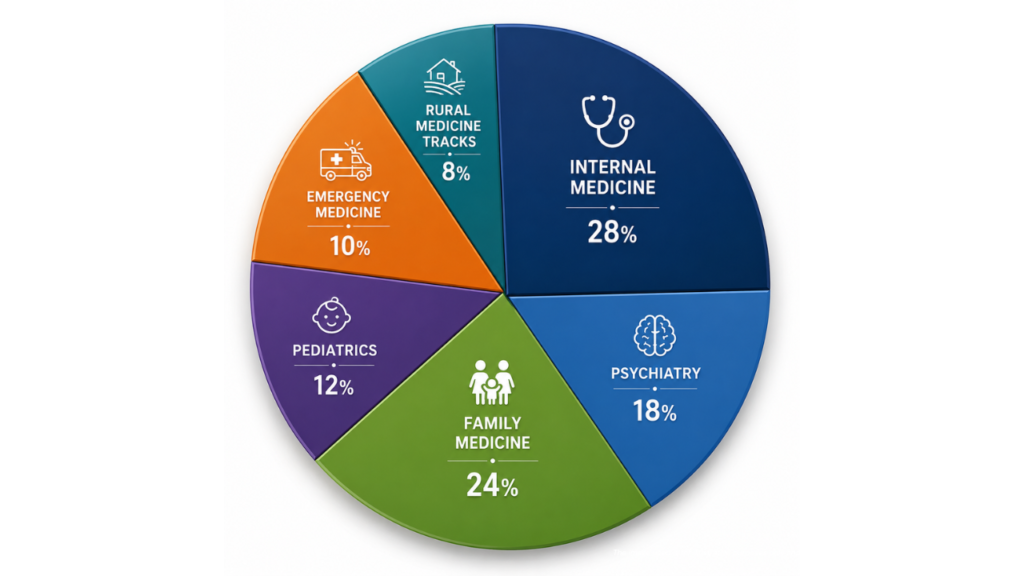
Internal Medicine
High demand for both inpatient and outpatient care across the state.
Family Medicine
The primary care shortage is the most visible gap. Family medicine expansion is likely to be prioritized.
Psychiatry
Mental health workforce shortages are severe enough that Psychiatry expansion is almost guaranteed.
Pediatrics
Access to pediatric care, especially outside urban centers, remains limited.
Emergency Medicine
Supports acute and trauma care capacity.
Rural Medicine Tracks
Specifically structured to improve physician distribution beyond major metro areas.
Why This Matters Nationally
Iowa’s announcement fits a pattern playing out across multiple states.
Graduating more medical students doesn’t fix physician shortages if there aren’t enough funded residency positions to train them. A medical school graduate without a residency match can’t practice independently, regardless of their qualifications.
That’s why state and federal investment is increasingly directed at:
- GME expansion
- Rural training pathways
- IMG-friendly licensure reforms
- Alternative physician workforce strategies
States with severe shortages are moving faster on this than they were five years ago.
Final Thoughts
Iowa’s 128-position GME expansion is a real workforce investment—$49.5 million annually, spread across 13 hospitals. The effect won’t be immediate. Program expansion takes time, accreditation takes time, and new positions show up in ERAS over years, not months.
But for residency applicants targeting Internal Medicine, Family Medicine, Psychiatry, and other shortage specialties, this is worth tracking. As more states move in this direction, the residency landscape should gradually open up—particularly in community and rural programs.
Check out New Residency Programs in the United States
Planning your residency budget? Check out Medvily’s ERAS Fee Calculator to estimate your total application costs.

Reviewed by: Medvily Verified Residency Experts
Sources & References
- Iowa Health and Human Services (Official Announcement)
Governor Reynolds and Iowa HHS announced federal approval of Iowa’s Graduate Medical Education expansion, expected to support more than 128 additional physicians in training statewide.
Iowa HHS Official News Release - University of Iowa Health Care (Official Hospital Source)
University of Iowa Health Care confirmed it is expected to train 76 additional physicians under the new Medicaid GME supplemental funding program.
University of Iowa Health Care GME Expansion Update - KCRG News Coverage
Local Iowa news coverage reporting approximately $49.5 million in annual federal funding for the GME expansion across 13 teaching hospitals.
KCRG Coverage of Iowa Residency Expansion - Quad-City Times Coverage
Regional reporting on Iowa’s addition of 128 residency positions and broader rural healthcare investment.
Quad-City Times Report - Iowa Medical Residency Training Grant Program
State program details on funding mechanisms for residency expansion and physician workforce development in Iowa.
Iowa Residency Training Grant Program
Ready to Apply? Let Medvily Guide You!
Medvily offers a complete suite of services including:
- Tutoring/Mentoring
- Clinical Electives
- Observerships & Externships
- Clinical Research
- Residency Application Support
- Mock Interviews & IV Prep
- Medical Licensing Support
📩 Email: contact@medvily.com
🌐 Website: www.medvily.com
Disclaimer: All trademarks referenced herein are the property of their respective owners. Medvily disclaims any affiliation, sponsorship, or endorsement by such trademark owners or their affiliated companies. The information provided is for general informational purposes only and