
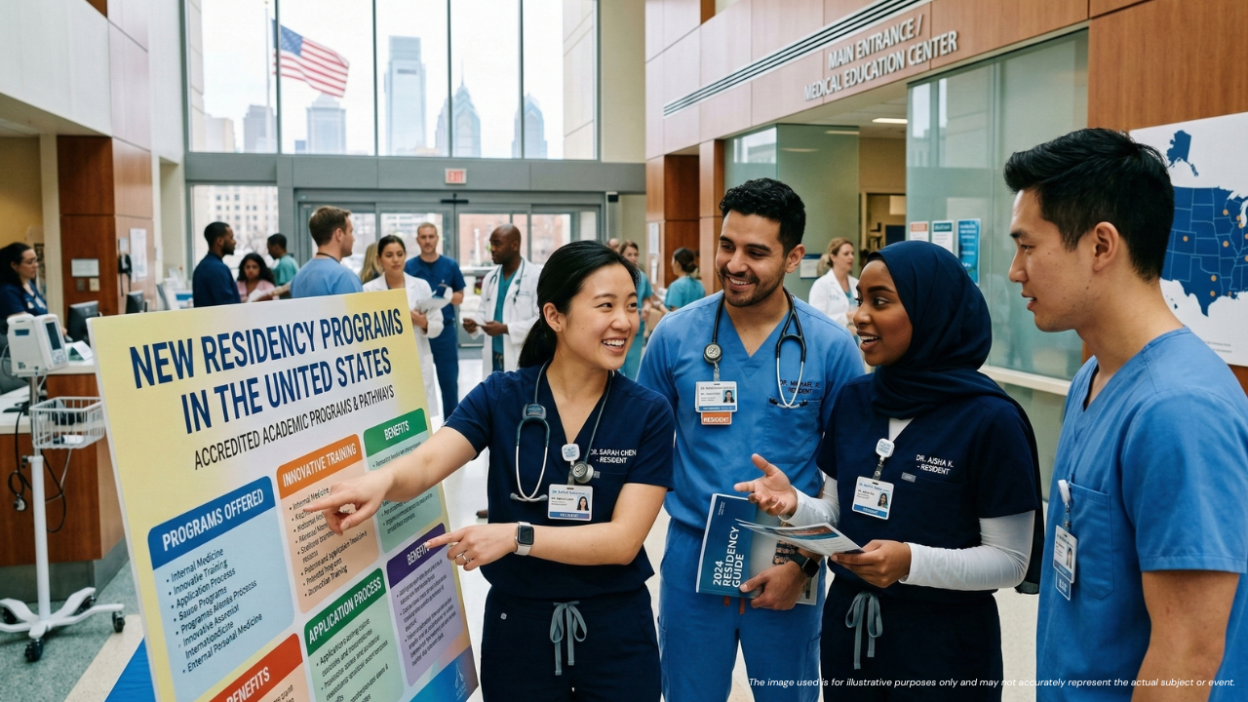
Discover new residency programs in the United States (2026–2027). Learn which hospitals are launching programs, IMG opportunities, and how to apply through ERAS and the Match.
Table of Contents
New medical residency programs launch every year across the United States, created by hospitals, universities, and healthcare systems trying to train more physicians and address a growing doctor shortage.
For international medical graduates (IMGs), new residency programs can be some of the most accessible entry points into U.S. medicine.
New programs tend to:
- Recruit broadly to fill their first resident classes
- Receive fewer applications than established programs
- Accept more IMGs
That’s why many IMGs deliberately target newly accredited programs during the application cycle.
This guide covers why the U.S. is expanding residency programs, which specialties are growing fastest, examples of new programs launching across the country, and how IMGs can find and apply to them.
Knowing how new programs develop can help applicants find openings that better-positioned candidates often overlook.
Newly Announced Residency Programs in the United States
Several hospitals across the United States are launching new residency programs to expand physician training capacity. Many of these programs are scheduled to begin training residents between 2026 and 2027
Below is a list of expected new residency programs. Updated May 21, 2026
| Hospital / Health System | State | Specialty |
|---|---|---|
| St. Joseph’s/Candler Health System | Georgia | Internal Medicine |
| Memorial Health University Medical Center | Georgia | Internal Medicine |
| University of Tennessee Graduate School of Medicine Program | Tennessee | Pediatrics |
These programs are part of broader initiatives designed to increase physician training and improve healthcare access in underserved regions.
New residency programs like these are especially important for applicants seeking emerging opportunities in the U.S. residency system.
Why the U.S. is creating more residency programs
The short answer: there aren’t enough doctors, and the gap is widening.
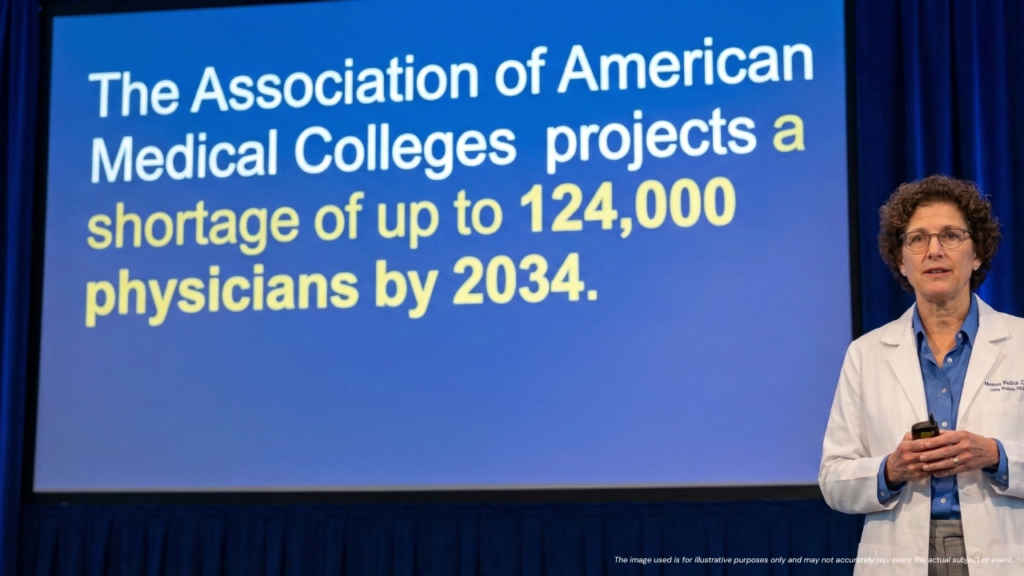
The Association of American Medical Colleges projects a shortage of up to 124,000 physicians by 2034. Three things are driving that number.
1. Aging physician workforce
Many doctors who entered practice in the 1980s and 1990s are now close to retirement. When they leave, someone has to replace them and training a physician takes years, so healthcare systems are scrambling to expand capacity now.
2. Growing, older population
More Americans, and older ones. Older adults are more likely to need ongoing care for conditions like heart disease, diabetes, and kidney disease. That steady increase in demand strains a physician workforce that isn’t growing fast enough to keep up.
3. Rural healthcare shortages
The shortage hits hardest in rural and underserved areas. Physicians tend to stay and practice near where they trained, which is why hospitals and state governments are funding local residency programs, not just to fill slots, but to anchor doctors in communities that can’t compete with urban medical centers for talent.
How New Residency Programs in the United States Are Funded
Residency training in the United States is funded primarily through Graduate Medical Education (GME), with Medicare historically serving as the largest source of that funding.
But federal funding hasn’t kept pace with demand. That gap has pushed states and healthcare systems to launch their own residency expansion initiatives, aimed at increasing residency positions, training physicians locally, and improving healthcare access in underserved areas.
Several states have recently launched programs to expand residency training.
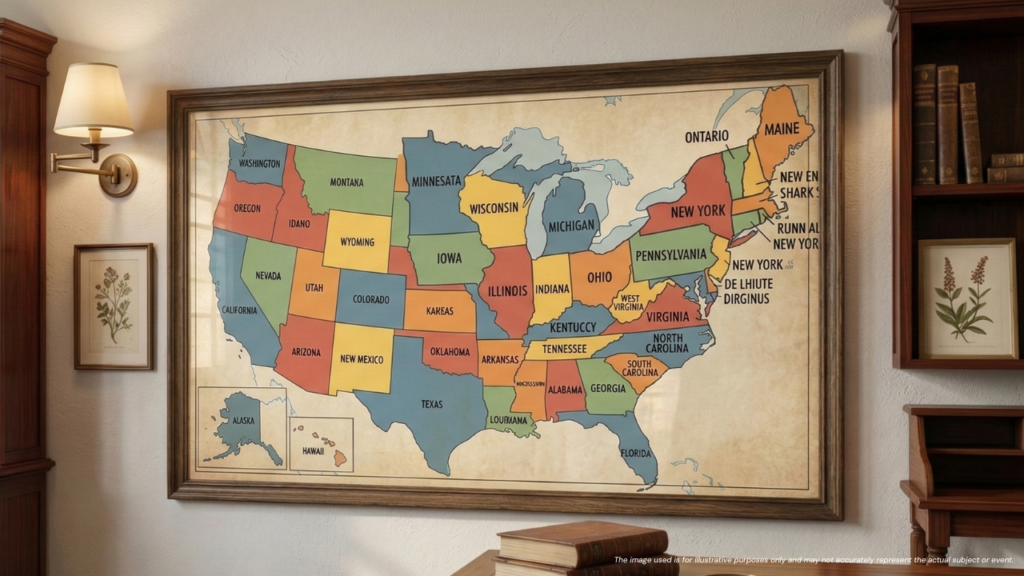
States Expanding Residency Programs
Across the United States, multiple states are investing in new residency training programs.
These initiatives are often supported by partnerships between hospitals and medical schools.
Examples include:
| State | Expansion Focus |
|---|---|
| Georgia | Rural workforce training |
| Texas | Large-scale GME expansion |
| Florida | Community hospital residencies |
| Tennessee | Rural residency initiatives |
| North Carolina | Primary care programs |
These state initiatives show that expanding residency training is very essential to strengthening the healthcare workforce.
Latest news on new residency programs:
Georgia Residency Expansion
One recent example of residency expansion is taking place in Savannah, Georgia.
The healthcare system St. Joseph’s/Candler Health System received state funding to launch new residency programs in partnership with the Medical College of Georgia.
The first group of residents is expected to begin training in July 2027.
Another Savannah hospital, Memorial Health University Medical Center, is also expanding its residency training capacity.
These developments illustrate how regional hospitals are increasingly becoming important training sites for physicians.
Read in detail about Georgia Invests $16.7M in New Medical Residency Programs: What It Means for International Medical Graduates (IMGs)
Specialties With the Most New Residency Programs
Not all medical specialties expand at the same rate.
Certain specialties have seen significant growth due to high workforce demand.
1. Internal Medicine
Internal medicine is the largest residency specialty in the United States. Many new residency positions are made available every year.
Internal medicine is one of the top specialty choice of hundreds of IMGs
2. Family Medicine
Family medicine focuses on primary care and community-based healthcare.
This specialty is expanding rapidly because many regions face shortages of primary care physicians.
Family medicine programs are frequently established by community hospitals, rural health systems and regional medical centers
These programs often recruit broadly and may offer opportunities for IMGs.
3. Emergency Medicine
Emergency medicine residency programs have also expanded in recent years.
Emergency medicine programs are typically based in large hospitals with busy emergency departments.
4. Surgery
General surgery programs expand more slowly because surgical training requires specialized infrastructure and experienced faculty.
However, some hospitals are launching new general surgery residencies to strengthen regional surgical care capacity.
Why New Residency Programs Can Benefit IMGs
Many international medical graduates target newly accredited residency programs.
There are several reasons why these programs may offer advantages.
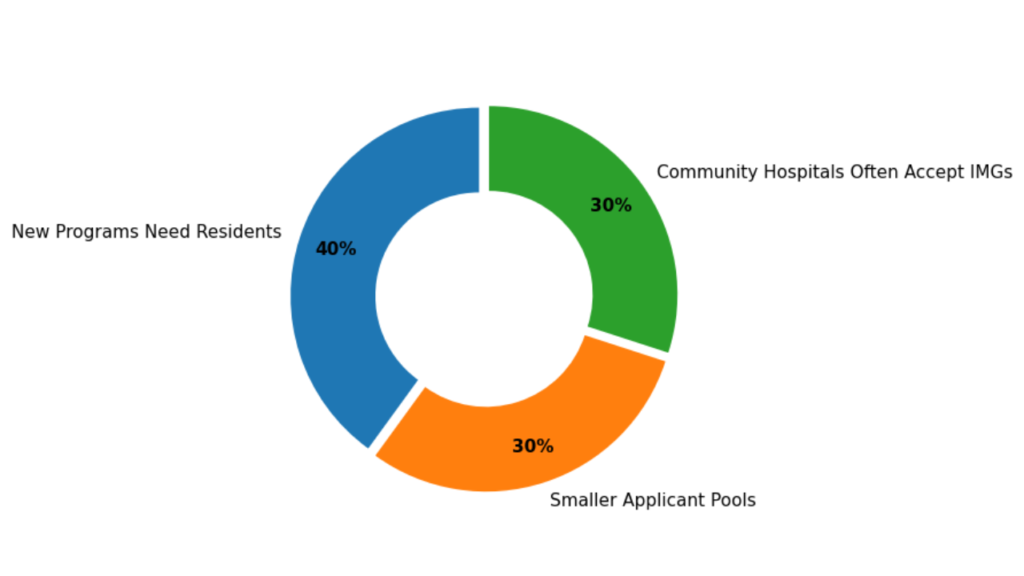
1. New Programs Need Residents
When a hospital launches a new residency program, it must fill its first training class.
Programs may recruit broadly to ensure they have enough residents to start the program successfully.
2. Smaller Applicant Pools
Well-known academic hospitals often receive thousands of applications each year.
New programs may initially receive fewer applications because they are less well known.
This can improve the chances of receiving an interview.
3. Community Hospitals Often Accept IMGs
Many new residency programs are created by community hospitals rather than major academic centers.
Community hospitals historically train a large number of international medical graduates. These institutions often value diverse clinical experience, multilingual physicians and willingness to serve underserved populations.
How to Find Newly Accredited Residency Programs
Identifying new residency programs requires monitoring accreditation announcements.
Residency programs must be accredited by the Accreditation Council for Graduate Medical Education before they can recruit residents. Once accredited, programs typically appear in the Electronic Residency Application Service (ERAS is the centralized platform where applicants submit residency applications)
Applicants who monitor these systems along the individual program websites and news sources, can identify newly accredited programs early in the application cycle.

How IMGs Can Apply to New Residency Programs
International medical graduates must complete several steps before applying for residency training in these new programs.
Step 1: Pass the Required Licensing Exams
Applicants must pass components of the United States Medical Licensing Examination.
These exams typically include:
- USMLE Step 1
- USMLE Step 2 CK
Some applicants also complete Step 3 to strengthen their applications.
Step 2: Obtain ECFMG Certification
IMGs must obtain certification from the Educational Commission for Foreign Medical Graduates. This certification confirms that international medical education meets U.S. standards. (Many programs accept applications without the ECFMG certification, but IMGs must get certified before ranking begins)
Step 3: Gain U.S. Clinical Experience
Many programs prefer applicants with clinical experience in the United States. This experience helps applicants understand the U.S. healthcare system.
Read more about USCE for IMGs: The Ultimate Guide to Secure Residency Success (2026)
Step 4: Apply Through Application
portal
Residency applications are submitted through ERAS or ResidencyCAS depending on the specialty.
Applicants submit documents including:
- personal statement
- letters of recommendation
- exam scores
- medical school transcripts
Step 5: Participate in the Residency Match
Applicants and programs submit rank lists through the National Resident Matching Program.
The Match algorithm pairs applicants with residency programs.
Successful applicants begin residency training in July.
How New Residency Programs Fit Into an IMG Application Strategy
International medical graduates typically apply to a large number of residency programs to increase their chances of receiving interviews.
Because newly accredited residency programs are less well known, they can become valuable targets in a broad application strategy.
Many IMG applicants apply to 100–200 programs, often including:
- established academic programs
- community hospital programs
- newly accredited residency programs
Including new programs in an application list can increase the likelihood of receiving interviews, particularly when these programs are still building their applicant pool.
Future Outlook for Residency Expansion
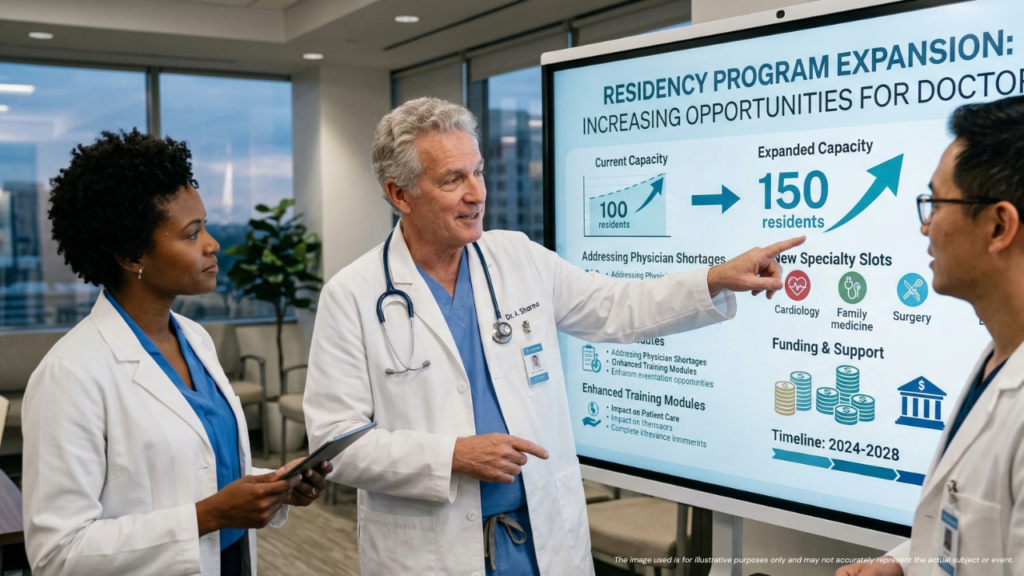
Residency program expansion is expected to continue throughout the next decade.
Key trends include:
- state-funded residency initiatives
- community hospital training programs
- partnerships between hospitals and universities
As healthcare demand grows, more hospitals will likely create residency programs to train physicians locally.
For international medical graduates, this trend could gradually increase residency opportunities.
However, strong applications remain essential for success.
Key Takeaways
New residency programs are being created across the United States to address physician shortages.
Important points include:
- Several states are investing in Graduate Medical Education expansion
- Hospitals are launching new residency training programs
- Internal Medicine and Family Medicine are expanding rapidly
- New programs can offer strategic opportunities for international medical graduates
Monitoring newly accredited programs each year can help applicants identify promising residency opportunities.
FAQs on New Residency Programs
What are new residency programs?
New residency programs are recently accredited physician training programs created by hospitals to train doctors in specific medical specialties.
Do new residency programs accept international medical graduates?
Many residency programs accept international medical graduates if they meet certification and licensing requirements.
Where can I find newly accredited residency programs?
New programs are usually listed by the Accreditation Council for Graduate Medical Education and appear in ERAS. Also you can use our tool to get notified on the latest residency programs that receive accreditation for the match.
Ready to Apply? Let Medvily Guide You!
Medvily offers a complete suite of services including:
- Tutoring/Mentoring
- Clinical Electives
- Observerships & Externships
- Clinical Research
- Residency Application Support
- Mock Interviews & IV Prep
- Medical Licensing Support
📩 Email: contact@medvily.com
🌐 Website: www.medvily.com
Disclaimer: All trademarks referenced herein are the property of their respective owners. Medvily disclaims any affiliation, sponsorship, or endorsement by such trademark owners or their affiliated companies. The information provided is for general informational purposes only and

[…] free to check out New Residency Programs for Match 2027 and ERAS 2027 Worksheet […]
[…] Check out New Residency Programs in the United States […]