
House Bill 127 New Mexico would create a 30-day expedited medical licensure process for eligible physicians, including foreign-trained doctors meeting specific criteria. The bill also introduces a provisional license pathway and replaces the telemedicine license with a telehealth registry. It has passed the House unanimously and now awaits Senate action.
Table of Contents
Overview
House Bill 127 New Mexico is moving through the 2026 legislative session with significant momentum after passing the House of Representatives in a unanimous 62–0 vote. The proposal introduces a statutory 30-day expedited licensure process for eligible physicians, establishes a structured provisional pathway for internationally trained doctors, and replaces the state’s existing telemedicine license with a telehealth registry system.
If enacted, the legislation would mandate faster processing timelines by the New Mexico Medical Board and could materially alter how physicians—both domestic and internationally trained—enter clinical practice in the state.
The bill is currently under consideration in the New Mexico Senate and has not yet become law.
Legislative Background and Current Status
Introduced during the 2026 regular session, House Bill 127 New Mexico is formally titled the “Medical Board Expedited Licensure” measure. The bill cleared House committees before advancing to a full floor vote, where it received unanimous bipartisan support.
After House passage, the legislation moved to the Senate for further review and committee consideration. If approved by the Senate and signed by the Governor, it would take effect according to the statutory implementation timeline specified in the bill.
At present, the proposal remains active legislation and is not yet enforceable.
Core Objective of House Bill 127 New Mexico
The central objective of House Bill 127 New Mexico is to address physician workforce shortages by:
- Reducing administrative delays in medical licensure
- Creating a defined expedited processing timeline
- Expanding access pathways for internationally trained physicians
- Modernizing telehealth participation rules
By codifying a 30-day processing requirement, the legislation seeks to shift licensure from a discretionary administrative timeline to a statutory mandate.
The 30-Day Expedited Licensure Mandate
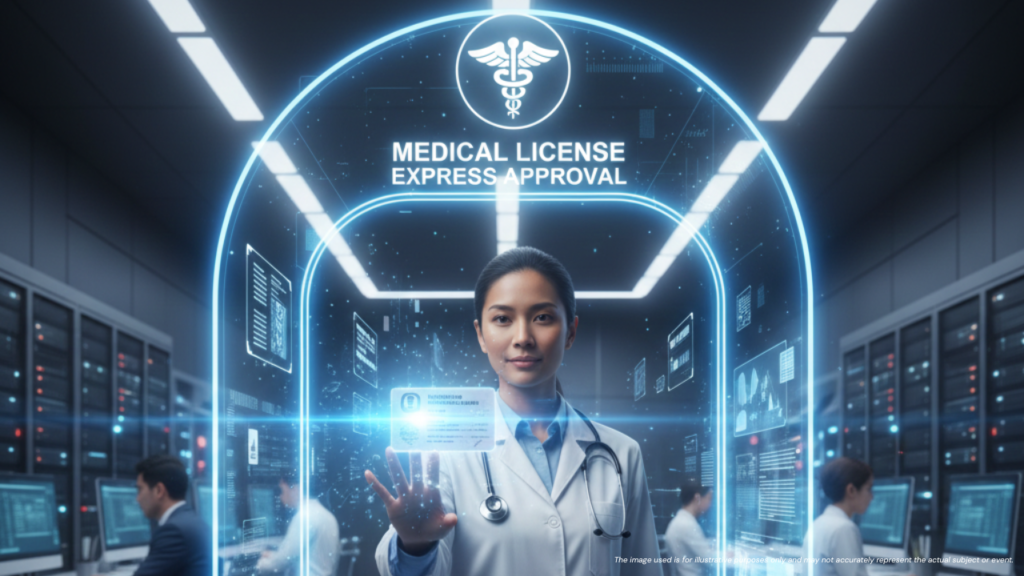
One of the most consequential provisions in House Bill 127 New Mexico is the requirement that the state medical board issue an expedited license within 30 days of receiving a completed application from eligible physicians.
Who Qualifies?
The expedited pathway applies to:
- Physicians already licensed and in good standing in another U.S. state or jurisdiction
- Certain internationally trained physicians meeting defined eligibility criteria
- Applicants who submit complete documentation and satisfy statutory requirements
By establishing a fixed processing window, the bill aims to reduce uncertainty and improve predictability in physician relocation decisions.

Provisional Licensure for Internationally Trained Physicians
A significant policy development within House Bill 127 New Mexico is the creation of a provisional license category for foreign-trained physicians.
Eligibility Criteria Include:
- Graduation from a recognized medical school listed in the World Directory
- Completion of required U.S. licensing examinations (Step 1 and Step 2)
- A full-time employment offer in a designated underserved area
- Practice under structured supervision
The provisional license is time-limited (up to two years). After meeting supervised practice requirements, physicians may qualify for unrestricted licensure.
This mechanism reflects a workforce-focused model that ties physician entry to service in medically underserved communities.
Workforce and Access Implications
New Mexico, like many rural states, faces persistent healthcare access gaps. The physician-to-population ratio in several counties remains below national benchmarks.
House Bill 127 New Mexico attempts to address this by:
- Reducing relocation friction for already licensed U.S. physicians
- Offering a structured entry pathway for internationally trained doctors
- Linking licensure eligibility to underserved community placement
The policy design suggests an intent to balance regulatory oversight with workforce expansion.

Telehealth Reform and Registry Replacement
In addition to licensure reform, House Bill 127 New Mexico repeals the state’s existing telemedicine license statute and replaces it with a telehealth registry system.
Under the proposed registry:
- Out-of-state physicians holding an unrestricted license elsewhere may register to provide telehealth services
- Registrants must maintain professional liability coverage
- A physical in-state office is not required
- The board retains disciplinary authority
This shift aligns telehealth oversight with a registration framework rather than a separate license classification.
Regulatory Oversight and Safeguards
While House Bill 127 New Mexico introduces expedited timelines, it does not eliminate regulatory standards.
The New Mexico Medical Board would continue to:
- Verify credentials
- Confirm examination completion
- Conduct background checks
- Enforce disciplinary standards
The 30-day mandate applies once a completed and qualifying application is received. It does not waive eligibility requirements.

Comparison With Traditional Licensure Timelines
Historically, physician licensure processing times across U.S. states can range from several weeks to multiple months, depending on verification delays and administrative backlog.
By legislating a 30-day processing requirement, House Bill 127 New Mexico would place the state among jurisdictions with the most clearly defined statutory timelines.
The measure complements broader national efforts aimed at mobility reform, including interstate licensure compacts and streamlined credential verification systems.
Economic and Fiscal Considerations
Implementation of House Bill 127 New Mexico carries administrative implications:
- Board staffing adjustments to meet statutory timelines
- Technology upgrades for application processing
- Transition from telemedicine licensure fees to registry fees
While expedited licensure could increase physician inflow, fiscal impact will depend on application volume and operational efficiency.
Legal and Policy Context
The introduction of House Bill 127 New Mexico reflects a broader post-pandemic policy trend emphasizing healthcare workforce flexibility.
Several states have recently:
- Reduced barriers for out-of-state physicians
- Created provisional pathways for internationally trained professionals
- Updated telehealth regulations
New Mexico’s approach integrates all three elements into a single reform package.

Implications for International Medical Graduates
Although the bill text refers to “graduates of medical schools outside the United States or Canada,” the practical effect is to expand structured pathways for International Medical Graduates (IMGs).
Under House Bill 127 New Mexico, foreign-trained physicians who meet examination and employment criteria may enter supervised practice more rapidly than under traditional residency-dependent pathways.
However, this pathway is conditional and geographically tied to underserved community service.
Senate Consideration and Next Steps
Following House passage, House Bill 127 New Mexico now requires:
- Committee review in the Senate
- Full Senate floor vote
- Executive signature
Until those steps are completed, the legislation remains pending.
Stakeholders—including healthcare employers, physician groups, and policy analysts—are closely monitoring the Senate’s action.
Broader Healthcare Access Strategy
The structure of House Bill 127 New Mexico suggests an integrated strategy focused on:
- Speed
- Accountability
- Rural access
- Telehealth modernization
Rather than eliminating standards, the bill reframes licensure around timeline certainty and service-based eligibility.
Frequently Asked Questions (FAQs)
When would House Bill 127 New Mexico take effect if signed into law?
If passed by the Senate and signed by the Governor, the effective date would follow the implementation timeline specified in the bill, typically aligned with the standard legislative effective date unless otherwise stated.
Does the 30-day processing timeline begin from submission or approval of documents?
The 30-day requirement applies once the New Mexico Medical Board receives a completed application, meaning all required documentation, verification, and supporting materials must be submitted.
Will applicants still need malpractice insurance under the new law?
Yes. Physicians practicing under expedited or provisional licensure would still be required to maintain professional liability insurance consistent with state regulatory standards.
Does the bill eliminate residency requirements for internationally trained physicians?
The legislation creates a provisional licensure pathway tied to supervised practice in underserved areas. It does not broadly eliminate all residency-related regulatory standards but offers an alternative structured route under defined conditions.
Could disciplinary history affect eligibility under the expedited pathway?
Yes. Physicians must be in good standing and meet professional conduct standards. Prior disciplinary actions or unresolved investigations may impact eligibility for expedited or provisional licensure.
Conclusion
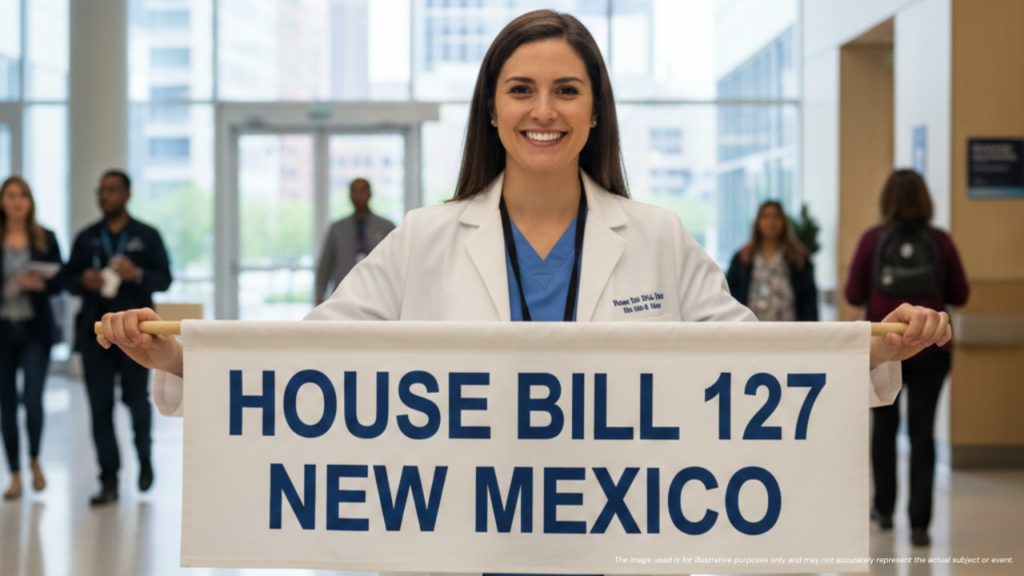
House Bill 127 New Mexico represents one of the most comprehensive physician licensure reform efforts introduced during the 2026 session. By mandating a 30-day expedited processing timeline, establishing a provisional pathway for internationally trained physicians, and modernizing telehealth participation rules, the legislation aims to address workforce shortages while maintaining regulatory oversight.
The measure has cleared the House unanimously and is currently under Senate consideration. It has not yet been enacted into law.
If approved by the Senate and signed by the Governor, House Bill 127 New Mexico could significantly reshape physician entry pathways and medical licensure timelines within the state.
Check out the North Carolina Provisional Pathway for IMGs.
Check out the Texas Provisional Pathway for IMGs.
Ready to Apply? Let Medvily Guide You!
Medvily offers a complete suite of services including:
- Tutoring/Mentoring
- Clinical Electives
- Observerships & Externships
- Clinical Research
- Residency Application Support
- Mock Interviews & IV Prep
- Medical Licensing Support
📩 Email: contact@medvily.com
🌐 Website: www.medvily.com
Disclaimer: All trademarks referenced herein are the property of their respective owners. Medvily disclaims any affiliation, sponsorship, or endorsement by such trademark owners or their affiliated companies. The information provided is for general informational purposes only and